Posture & movement
Lower back pain that keeps coming back
Short answer
Updated 2026-10-21. Educational information, not a diagnosis. Symptoms may need medical or dental assessment.
Key points
- Symptoms can have more than one cause.
- Posture and movement assessment is not a medical diagnosis.
- Bodywork and strength work are individualized.
- No result or session count is guaranteed.
- The medical warning signs below need appropriate care.
What drives recurring lower back pain?
Lower back pain can have many causes and is not diagnosed from pelvic position alone. An assessment at Joe's Posture Reset explores posture, movement and bodywork goals. Individual strength work and movement habits may complement medical advice. Seek clinical assessment for persistent, unexplained or worsening symptoms; no outcome or session count is guaranteed. Read the related educational guide.
How we work on it
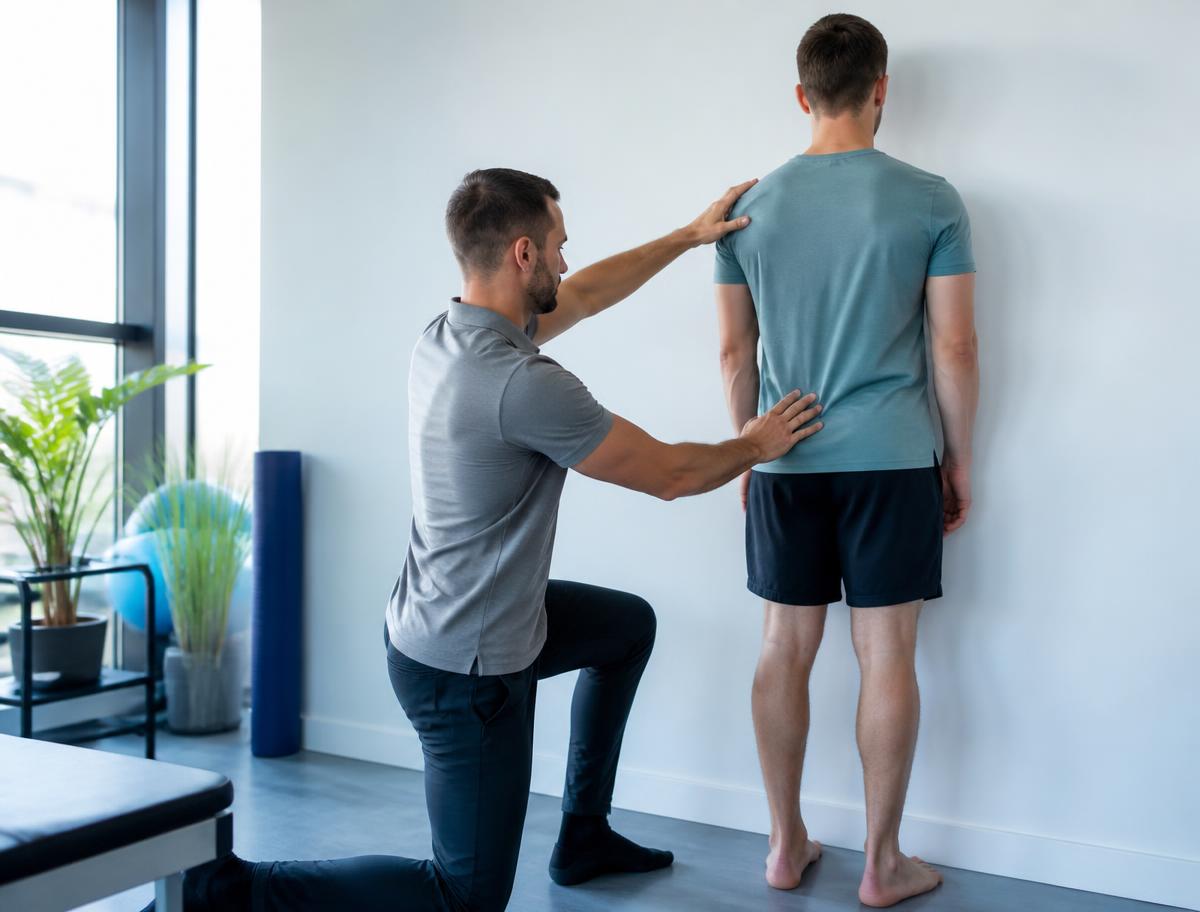
- Assess pelvic position, hip mobility, and how you bend, sit and stand.
- Release hip flexors, lumbar erectors and glute tension in a Posture Reset™ or Neuro-Fascia Massage™.
- Retrain glutes, multifidus and deep core with Posture Performance Training.
- Recover. Many clients add infrared heat in the Recovery Rooms to loosen up before mobility work.
When to see a doctor first
Get medical care right away for back pain with loss of bladder or bowel control, numbness in the groin, worsening leg weakness, fever, unexplained weight loss, a history of cancer, or pain after a fall or accident.
Common questions
Who should assess persistent back pain?
An appropriate clinician should evaluate unexplained, persistent or worsening symptoms. A posture appointment is not a substitute for that assessment.
Does sitting cause back pain?
Long uninterrupted sitting is a common contributor. Changing position often and strengthening the hips helps more than any single chair.
Can I use the sauna with back pain?
Many people find heat helps tight muscles. Skip it for a fresh injury with swelling, and ask your doctor if you're unsure.