Posture & movement
Sciatica: symptoms and posture considerations
Short answer
Updated 2026-10-21. Educational information, not a diagnosis. Symptoms may need medical or dental assessment.
Key points
- Symptoms can have more than one cause.
- Posture and movement assessment is not a medical diagnosis.
- Bodywork and strength work are individualized.
- No result or session count is guaranteed.
- The medical warning signs below need appropriate care.
What usually drives sciatica?
Sciatica describes pain, tingling or numbness along the sciatic nerve. Different conditions can cause it, including nerve irritation related to a disc. Posture and movement work may complement a clinician's plan, but cannot identify the cause on its own. At Joe's Posture Reset we explore movement goals, not diagnose or promise to decompress a nerve. Read the related educational guide.
How we work on it
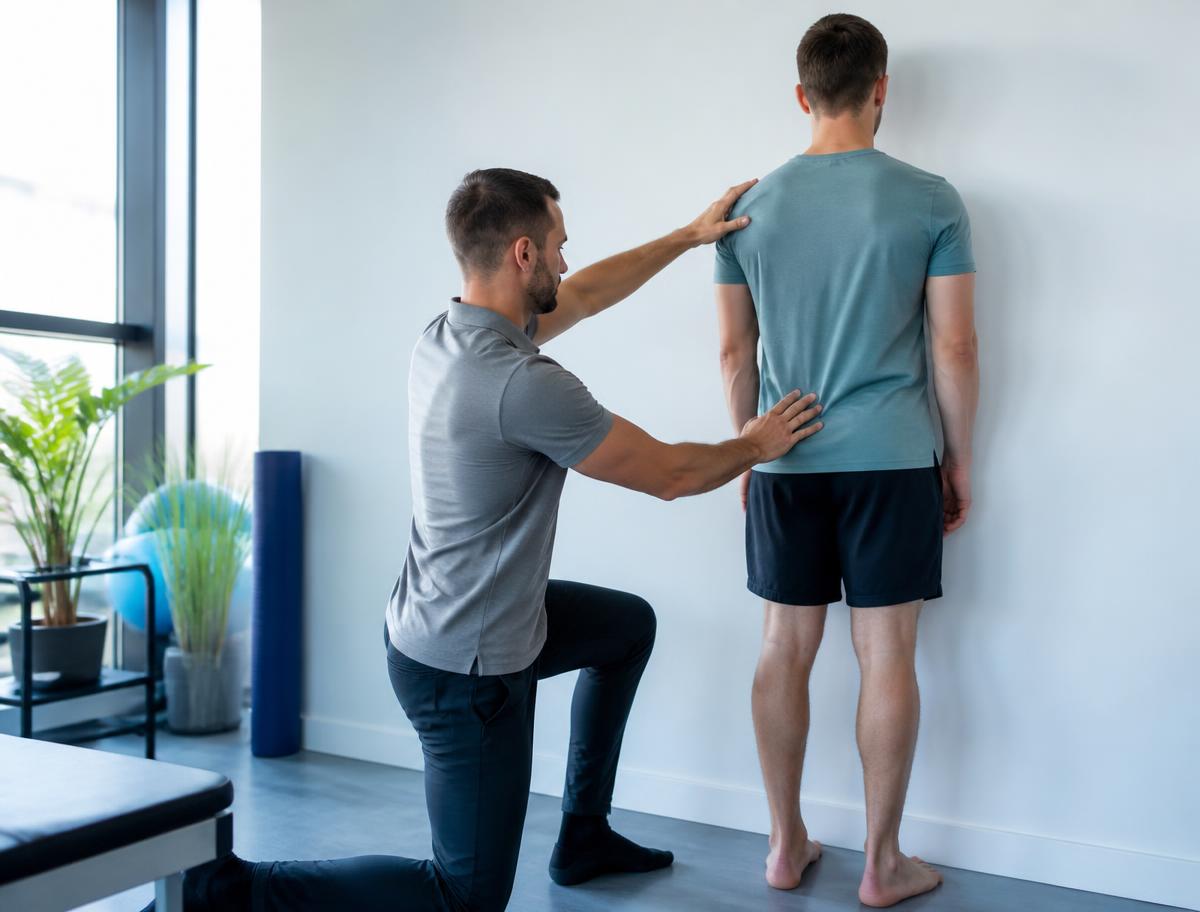
- Assess. We look at how your pelvis, hips and low back line up standing, walking and bending, and where the pattern starts.
- Release. A Posture Reset™ session uses hands-on neuromuscular work to release the guarding muscles around the hip and low back.
- Retrain. Posture Performance Training strengthens the glutes and deep core to support the movement plan.
- Maintain. Simple daily movements from our video library, such as the holistic sciatic stretch and deep-six activation.
What to expect
Your first visit starts with the assessment and includes hands-on work. Many clients feel a difference after the first session. Lasting change usually takes a series of sessions; your practitioner sets the plan after your assessment.
When to see a doctor first
Get medical care right away if you have loss of bladder or bowel control, numbness in the groin or inner thighs, leg weakness that is getting worse, sciatica after a fall or accident, or pain with fever. We'll also refer you out if your symptoms don't fit a posture pattern.
Common questions
Can posture correction help sciatica?
Posture and movement work may complement a clinician's advice, depending on the cause. We do not diagnose sciatica or guarantee symptom relief.
Should I stretch or rest?
Gentle movement usually beats bed rest. Avoid any stretch that sends pain further down the leg, and get assessed if it keeps coming back.
Do I need a referral?
No referral is required to book. HSA/FSA eligibility depends on your plan; confirm with your benefits provider.